Refractive Lens Surgery
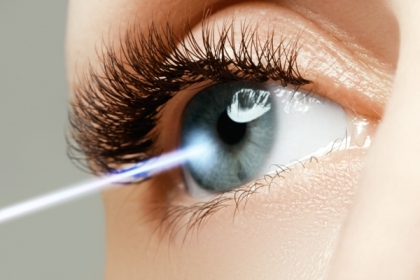
Refractive lens surgery replaces the natural lens with a personalised intraocular lens in patients whose prescription cannot be corrected by laser.

Quick Answer
Refractive surgery is the diagnosis and treatment, by this branch of surgery, of conditions affecting the transparent layer of the eye and of problems such as astigmatism, myopia and hyperopia. The most effective procedure for treating these conditions is the laser method.
Highlights
- Refractive lens surgery is a type of laser-era operation that is very widely preferred in Turkey and around the world.
- These operations offer a convenient option for many people who want to be free of glasses.
Content reviewed by Asst. Prof. Dr. İlya Ayvatoğlu on 24.09.2026.
Refractive surgery is the diagnosis and treatment, by this branch of surgery, of conditions affecting the transparent layer of the eye and of problems such as astigmatism, myopia and hyperopia. The most effective procedure for treating these conditions is the laser method. When a person’s eye condition has advanced considerably, laser treatment offers patients alternative solutions. What we call refractive errors, astigmatism, myopia and hyperopia, are caused by errors in the way the visual system refracts light. When the rays entering the transparent layer of the eye are not sent correctly to the retina, perceiving objects becomes very difficult. With refractive surgery, personalised intraocular lens replacement operations can be performed on the eyes of patients who respond poorly to laser surgery or are not suitable for it. With these operations the patient can be freed from wearing glasses.
Refractive lens surgery is a type of laser-era operation that is very widely preferred in Turkey and around the world. In patients whose prescription cannot be changed by the laser method, the eye condition is treated with this method, known as refractive lens exchange. This is generally more common in patients aged 40 and over. The intraocular lenses applied to patients can be chosen as distance-focused or as combined near and distance lenses.
People who wear glasses or contact lenses, whose prescription has not changed by more than 0.50 dioptres in the last year, who have astigmatism of up to -6 dioptres, myopia of up to -10 dioptres and hyperopia of up to +4 dioptres, whose corneal thickness is sufficient, and who do not have rheumatic disease or diabetes can have laser surgery if the tests and examinations performed by refractive surgery find them suitable. These operations offer a convenient option for many people who want to be free of glasses. If a patient has worn glasses for a certain period and no longer wants to use lenses, they should apply to refractive lens surgery and have a preliminary examination. Refractive lens exchange is a surgical treatment option suited to the other refractive surgery methods and techniques for high refractive errors known as myopia, astigmatism and hyperopia; it is the removal of a lens without cataract and the placement of an intraocular lens in its place. In recent years, with the advances cataract surgery has made in its methods and in biometry, very good refractive results have been achieved. However, side effects that any medicine or disease may cause also exist, such as loss of the accommodation the eye uses to see objects at different distances clearly, retinal detachment, displacement of the globe within the orbit, and posterior capsule opacification. After refractive lens surgery, these issues must be followed up regularly and continuously, particularly with regard to retinal detachment.
Videos

Frequently Asked Questions
Patients whose prescription cannot be corrected by the laser method, generally aged 40 and over. The intraocular lens can be distance-focused or a combined near and distance lens.
Possible effects such as loss of accommodation, retinal detachment and posterior capsule opacification must be followed up regularly and continuously, particularly with regard to retinal detachment.
Contact
Request Information
Leave your questions about Refractive Lens Surgery and our team will call you.
- WhatsApp+90 530 265 31 39
Discover